
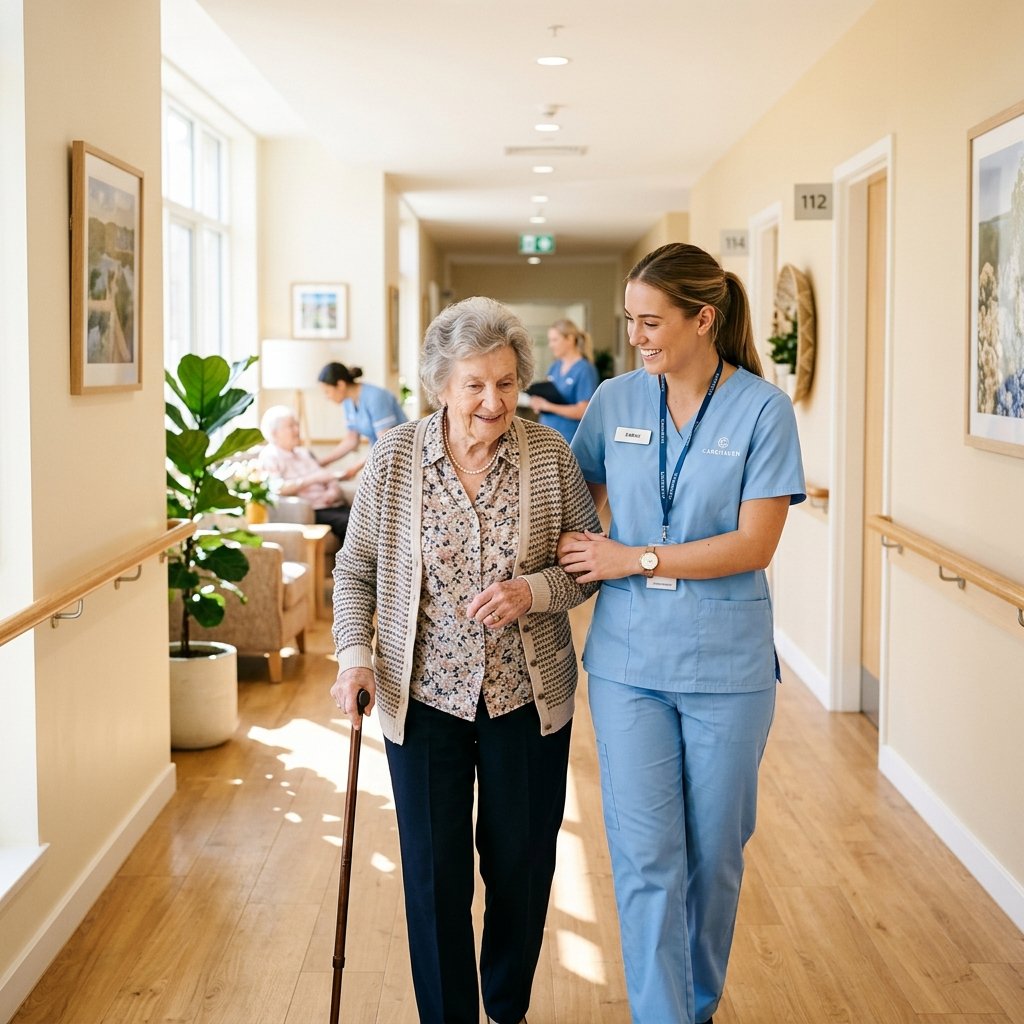
HealthCare Assistant Duties & Responsibilities in an Irish Nursing Home | The Complete 2026 Guide
The HealthCare Assistant (HCA) is the backbone of daily life in every Irish nursing home — the person who ensures residents wake up with dignity, eat well, stay active, and feel genuinely cared for. Understanding the full range of health care assistant duties and responsibilities in a nursing home matters whether you are considering a career in Irish eldercare, seeking to understand the standard of care your loved one receives, or preparing for an HCA job interview. This complete 2026 guide covers every aspect of the HCA role in Ireland — from daily personal care tasks and clinical support responsibilities, to the QQI qualifications, HIQA standards, and Garda Vetting requirements that govern this vital profession.
👋 The Role of the HealthCare Assistant in Irish Nursing Homes
The healthcare assistant role in Ireland is formally regulated under HIQA (Health Information and Quality Authority) standards — the same authority that inspects and registers all nursing homes operating in the Republic of Ireland. HCAs work under the supervision of registered nurses, carrying out a defined scope of care that directly determines the quality of daily life for residents.
Demand for qualified HCAs across Irish nursing homes has never been higher — HIQA inspection reports consistently cite staffing levels as a key quality indicator, and the HSE's ongoing expansion of community and residential care has created thousands of permanent, part-time, and full-time HCA roles Ireland-wide. For domestic applicants and international students on Stamp 2 visas, the HCA role represents one of the most accessible and fulfilling entry points into the Irish healthcare system.
📋 Core HealthCare Assistant Duties and Responsibilities in a Nursing Home | Daily Overview
The healthcare assistant duties and responsibilities in a nursing home setting span four core areas of daily resident care — personal care, mobility and transfers, nutritional support, and social and emotional wellbeing. Each area is governed by the individual resident's Person-Centred Care Plan, which is developed by the nursing team and reviewed regularly in line with HIQA standards.
No two residents have identical care plans — and the ability to adapt your approach to the individual while maintaining consistent professional standards is the defining skill of an excellent HCA.
- Assisting with showering, bathing, and washing
- Dressing and grooming to resident preferences
- Oral hygiene and denture care
- Skin care and pressure sore prevention
- Shaving, nail care, and hair care
- Assisting residents to move safely in and out of bed
- Using hoists, slide sheets, and transfer belts
- Supporting ambulation with walking frames
- Repositioning residents to prevent pressure injuries
- Strict adherence to manual handling guidelines
- Assisting residents who need support at mealtimes
- Monitoring and recording fluid intake
- Noting dietary requirements and allergies
- Observing and reporting swallowing difficulties
- Ensuring mealtimes are calm, dignified, and enjoyable
- Spending quality time conversing with residents
- Facilitating participation in group activities
- Supporting residents with dementia or cognitive decline
- Recognising signs of low mood or social withdrawal
- Acting as a link between residents and families
🚿 Providing Personal Care | Dignity First
Assisting a resident with personal care is the most intimate of all health care assistant duties and responsibilities in a nursing home — and it requires equal measures of technical skill, empathy, and genuine respect for personal dignity. Every personal care task is guided by the resident's preferences as documented in their care plan — the time they prefer to wash, how they like to be dressed, and which aspects of their grooming routine matter most to them.
HCAs are trained to observe and report any changes during personal care — new skin discolouration, pressure marks, bruising, or changes in range of movement — all of which are clinically significant observations that nursing staff must be informed of promptly. This observational role makes the HCA the first line of clinical detection in the daily care environment.
🦽 Mobility and Safe Transfers | Manual Handling Compliance
Safe manual handling is a legally mandated competency for all HCA roles Ireland-wide — governed by the Safety, Health and Welfare at Work (General Application) Regulations and enforced through mandatory training that all HCAs must complete before performing any transfer or mobility assistance. Every nursing home in Ireland is required to have documented manual handling risk assessments for each resident who requires mobility support.
HCAs must never perform a transfer that exceeds their trained competency or goes against a resident's individual manual handling care plan — even in response to a resident's own request. Consistent adherence to safe transfer protocols protects both the resident and the HCA from injury.
🍽️ Nutritional Support | Monitoring and Reporting
Malnutrition and dehydration are two of the most clinically significant risks in residential eldercare — and the health care assistant is uniquely positioned to detect early warning signs during daily mealtime support. HCAs are responsible for completing fluid balance charts and food intake records as part of the nursing home's nutritional monitoring system, reporting any concerns to the supervising nurse without delay.
Residents with conditions such as dysphagia (swallowing difficulties), Parkinson's disease, or advanced dementia require particularly careful mealtime support — and HCAs working in these settings typically receive additional specialist training in modified texture diets and safe feeding techniques in accordance with the Speech and Language Therapist's recommendations.
💬 Social and Emotional Wellbeing | The Human Heart of the Role
Of all the health care assistant duties and responsibilities in a nursing home, the social and emotional dimension is the one most valued by residents themselves — and the one most frequently cited in positive HIQA inspection reports. Loneliness and social isolation are genuine clinical risks in residential care, and the HCA who takes time to listen, to remember personal histories, and to make a resident feel seen and valued is providing care that no medication can replicate.
HCAs support the Activities Programme in most nursing homes — helping residents participate in music sessions, art classes, gardening clubs, and reminiscence groups. They also play a vital role in supporting family visits — ensuring the environment is welcoming and that families are kept appropriately informed through the nursing team.
🩺 Clinical and Administrative Support Tasks | Under Nursing Supervision
Beyond direct personal care, health care assistant duties and responsibilities in a nursing home include a range of clinical observation and administrative support tasks carried out under the supervision of registered nursing staff. These tasks are clearly defined in the HCA's scope of practice — HCAs do not administer medications, perform clinical procedures, or make clinical decisions, but they play a critical supporting role in the clinical monitoring of residents.
Clinical Observation and Monitoring
- Weight monitoring: Assisting nursing staff with regular resident weigh-ins and recording results accurately in the resident's care documentation.
- Skin integrity monitoring: Observing and reporting any new marks, redness, bruising, or changes in skin condition during personal care — key for early pressure injury detection.
- Reporting changes in condition: Immediately reporting to the supervising nurse any change in a resident's mood, behaviour, appetite, mobility, or physical presentation that differs from their normal baseline.
- Vital signs assistance: In some settings, HCAs may assist with recording temperature, pulse, or blood pressure under nursing supervision — subject to completion of relevant training.
Record-Keeping and Documentation
- Daily care logs: Accurate completion of care records detailing personal care provided, resident mood, and any notable observations — a legal requirement under HIQA standards.
- Fluid balance charts: Recording all fluid intake and output where clinically indicated — critical for residents at risk of dehydration or with urinary conditions.
- Incident reports: Completing or assisting with incident documentation following any fall, injury, or unusual event involving a resident.
- Handover communication: Providing clear, accurate verbal and written handover to the incoming shift team at shift changeover.
Infection Control and HIQA Compliance
Infection prevention and control is one of the most rigorously monitored areas in HIQA nursing home inspections — and HCAs are on the front line of implementing these standards every shift. Every health care assistant in an Irish nursing home is required to complete Hand Hygiene training and demonstrate consistent compliance with standard precautions including the use of personal protective equipment (PPE), safe disposal of clinical waste, and isolation procedures.
If you are relocating from outside the EU/EEA to take up an HCA role in an Irish nursing home on a Critical Skills Employment Permit or work visa, you must hold valid private health insurance before registering for your IRP card within 90 days of arrival. Delays in securing compliant insurance can push back your start date and create HR complications with your nursing home employer.
Feather Insurance provides an instantly issued, officially approved expat policy — no PPSN required upfront, at approximately €72/month. Get compliant before you land.
🛡️ Get Instant Expat Cover — Feather Insurance →🎓 Requirements to Work as an HCA in Ireland | Qualifications, Vetting & Standards
Working as a health care assistant in an Irish nursing home requires meeting a defined set of qualification, vetting, and regulatory requirements — all of which are monitored by HIQA as part of the nursing home registration process. These requirements protect residents, protect HCA employees, and ensure the consistency of care standards across all registered homes.
QQI Level 5 Healthcare Support Certificate
The standard entry qualification for HCA roles Ireland-wide is the QQI Level 5 Certificate in Healthcare Support — a nationally accredited qualification awarded by Quality and Qualifications Ireland (QQI). The Level 5 certificate covers modules including Care of the Older Person, Safety and Health at Work, Infection Prevention and Control, Communications, and Work Experience in a care setting.
| Requirement | Standard | Notes |
|---|---|---|
| Primary qualification | QQI Level 5 Healthcare Support | Or demonstrably working toward it — many nursing homes hire candidates enrolled in the programme |
| Garda Vetting | Mandatory — no exceptions | Applied for through the nursing home as the registered organisation. Processing: 1–3 weeks standard |
| References | Minimum 2 written references | One should be from a previous employer or supervisor. Character references accepted for new entrants |
| Manual handling training | Mandatory before performing any transfer | Typically provided by the nursing home. Certificate valid for 3 years |
| Hand hygiene training | Mandatory — HIQA standard | Completed during induction. Annual refresher required |
| Overseas qualification recognition | Assessed on individual basis | Overseas-trained HCAs may need to demonstrate equivalence or top up with Irish QQI modules |
Garda Vetting — What It Involves
Garda Vetting is a legal requirement under the National Vetting Bureau (Children and Vulnerable Persons) Acts 2012–2016 for anyone working or volunteering in a role that involves access to vulnerable adults — which includes all nursing home positions. The nursing home applies for vetting on your behalf through the National Vetting Bureau portal. You complete an online form with your personal details, address history for the past 5 years, and any overseas addresses where you lived for 6+ months.
International applicants who have lived in countries outside Ireland and the UK must also submit overseas police clearance certificates as part of the vetting process. Allow 4–6 weeks for overseas clearance from countries such as Pakistan, India, or the Philippines — and begin this process before accepting a job offer where possible.
Relocating to Ireland to take up an HCA position — whether for a short-term contract or a permanent role — requires careful travel and accommodation planning, particularly during the Garda Vetting and induction period when your exact start date may shift. Keeping bookings flexible protects your budget during this uncertain phase.
Trip.com offers competitive rates on international flights to Dublin, Cork, Shannon, and Knock airports — plus flexible short-term hotel and apartment stays near nursing homes across Ireland, with date-change options built in.
✈️ Book Flexible Ireland Travel — Trip.com →💰 HCA Salary in Ireland 2026 | What Health Care Assistants Earn
The HSE pay scale for Health Care Assistants starts at €30,197 at Point 1 and rises to a maximum of €39,198 at LSI2 through annual increments. With shift premiums for night duty (×1.25), Sunday working (×2.0), and public holiday payments, many full-time HCAs in acute rota settings earn significantly above the basic scale — with gross annual earnings of €35,000–€45,000 realistic for those working regular unsocial hours.
Private nursing homes set their own pay rates — typically competitive with HSE scales but varying by home, location, and experience. Always check whether the advertised rate is the basic rate or includes premiums, and compare the shift pattern before accepting any HCA role offer.
❓ Frequently Asked Questions | HCA Roles Ireland 2026
🏁 Summary | Health Care Assistant Duties and Responsibilities in a Nursing Home
The health care assistant duties and responsibilities in a nursing home in Ireland encompass far more than a task list — they represent the daily delivery of dignity, safety, comfort, and human connection to some of the most vulnerable members of our society. From personal care and safe mobility transfers to clinical documentation and HIQA compliance, the HCA role in Ireland is regulated, respected, and genuinely essential.
For those considering a career in Irish eldercare — whether as a first job, a career change, or a stepping stone toward nursing — the HCA role offers immediate employment, clear qualification pathways through QQI Level 5, and the deep personal satisfaction that comes from making a genuine difference every single shift. Use the Career Path tool above to map your personalised route into Irish nursing home care, and check the related resources below for salary details, visa information, and the broader Irish healthcare career landscape.